
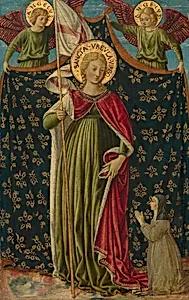
Saint Ursula with Two Angels and Donor
c. 1455/1460
Medium
tempera on panel
Dimensions
overall: 44.5 x 28.5 cm (17 1/2 x 11 1/4 in.) framed: 60.6 x 41.9 x 5.1 cm (23 7/8 x 16 1/2 x 2 in.)
Classification
Painting
Department
CIS-R
Museum
National Gallery of Art, Washington, D.C.
Credit
Samuel H. Kress Collection
Accession Number
1939.1.265
Rights
Public Domain
Art Historical Context
In the mid-15th century,entine painter Benozzozzoli crafted *Saint Ursula with Two Angels Donor* (c. 1455/1460), a delicate tempera on panel measuring just 44.5 x 28.5 cm. Gozzoli, a pupil Fra Angelico and master of Early Renaissance frescoes like those in the Medici Chapel excelled in vivid, narrative scenes blending devotion with portraiture. This small-scale painting, now in the National Gallery of Art's Samuel H. Kress Collection likely served as a private devotional piece or predella panel, inviting intimate contemplation. The composition centers on Saint Ursula, the legendary virgin martyr and leader of 11,000 companions slain by Huns, flanked by two graceful angels. A donor figure—probably a pious patron—kneels in prayer, a common Renaissance convention symbolizing personal faith and intercession. Tempera, made from pigments mixed with egg yolk, allowed Gozzoli's signature luminous colors and intricate details, evoking gold-ground altarpieces of the International Gothic while embracing Renaissance humanism. This work captures the era's spiritual fervor amid Florence's artistic flowering, highlighting Gozzoli's elegant figures and storytelling flair. Visitors will appreciate its intimate scale, perfect for quiet reflection on faith's enduring role in art.