
Sakhmet Amulet
Unknown Artist
664–30 B.C.
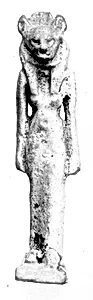
Medium
Faience
Dimensions
H. 5.1 cm (2 in)
Classification
Amulet, Sakhmet
Period
Late Period–Ptolemaic Period
Department
Egyptian Art
Museum
Metropolitan Museum of Art, New York, NY
Credit
Gift of Joseph W. Drexel, 1889
Accession Number
89.2.355
Rights
Public Domain
Tags
Art Historical Context
Nestled in the Egyptian Art collection at the Metropolitan Museum of Art, the *Sakhmet Amulet* a petite faience talisman standing just 5.1 cm tall, crafted by an unknown artist between 664–30 B.C. during Egypt's Late Period through the Ptolemaic era (Dynasties 26–30). This vibrant blue-green glazed object honors Sekhmet, the fierce-headed goddess embodying war, destruction, and healing—a duality that made her a potent protector in ancient Egyptian belief. Amulets like this were everyday safeguards, worn or carried to ward off evil, illness, or misfortune. Sekhmet's formidable presence symbolized the pharaoh's power and divine retribution, yet her healing aspect linked her to renewal and medicine. Produced under Ptolemaic rule, when Greek influences blended with enduring Egyptian traditions, such charms highlight the resilience of native spirituality amid cultural shifts. Faience, a signature Egyptian medium of crushed quartz and glaze fired at low temperatures, allowed for affordable, colorful mass production of ritual objects. Its glossy sheen mimicked precious stones, making protection accessible to all. Gifted to the Met in 1889 by Joseph W. Drexel, this amulet invites us to marvel at ancient devotion in miniature form.