
Salad Bowl
Unknown Artist
1785–90
Medium
Porcelain
Dimensions
H. 5 in. (12.7 cm); Diam. 10 3/8 in. (26.4 cm)
Classification
Salad bowl
Culture
Chinese, for American market
Department
The American Wing
Museum
Metropolitan Museum of Art, New York, NY
Credit
Bequest of James T. Woodward, 1910
Accession Number
10.149.218
Rights
Public Domain
Tags
Art Historical Context
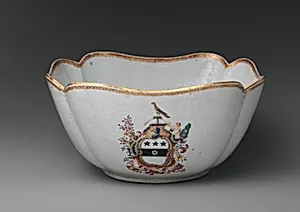
This elegant salad bowl, crafted in porcelain around 1785–90 by an unknown Chinese artist specifically for the American market, the height of Sino-American trade in luxury goods during the early federal period. Measuring 5 inches high and 10⅜ inches in diameter, generous form was ideal for serving fresh greens at affluent dinner tables, blending Eastern craftsmanship with Western tastes. Adorned with motifs of birds and a coat arms—likely a customized family crest—the bowl reflects the personalization common in export porcelain, where Chinese potters adapted their designs to suit European and American patrons. Porcelain's significance lies in its technical mastery: translucent white bodies fired at high temperatures, often enhanced with vibrant overglaze enamels for intricate details like the lively birds and heraldic symbols. These pieces arrived via clipper ships from Canton, symbolizing America's growing prosperity and global connections post-Revolution. Such wares graced the homes of merchants and elites, bridging cultures and elevating everyday dining to art. Now in The Metropolitan Museum of Art's American Wing, thanks to the 1910 bequest of James T. Woodward, this bowl offers a window into 18th-century transatlantic exchange—where a simple serving dish became a status symbol.