
Sallet
ca. 1510–20
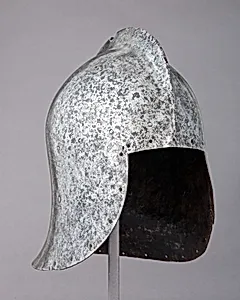
Medium
Steel
Dimensions
H. without crest, 11 1/2 in. (29.2 cm); W. 7 5/8 in. (19.4 cm); D. 10 1/2 in. (26.7 cm); Wt. 4 lb. 3 oz. (1899 g)
Classification
Helmets
Culture
Italian
Department
Arms and Armor
Museum
Metropolitan Museum of Art, New York, NY
Credit
Gift of J. Pierpont Morgan, 1911
Accession Number
11.89.5
Rights
Public Domain
Art Historical Context
Step into the world of Renaissance warfare with this exquisite *Sallet*, crafted around 1510–20 by the renowned Milanese armorer Pietro da Castello. This steel helmet, a pinnacle of Italian arms craftsmanship, exemplifies the transition from medieval to early modern armor. Sallets were favored by infantry and light cavalry for their balance of protection and mobility, featuring an open face, a protective tail at the back, and often a crest (here absent). At just 4 pounds 3 ounces, its lightweight design—measuring 11½ inches high, 7⅝ inches wide, and 10½ inches deep—allowed wearers to fight agilely on the battlefield. Pietro Giacomo da Castello hailed from Milan, Europe's premier center for armor production during the Renaissance, where guilds of *armaioli* blended engineering precision with artistic flair. This piece reflects the era's technological advances in steel forging and tempering, producing helmets that were both functional shields against blades and blunt force and symbols of status for condottieri mercenaries. Italian sallets like this one influenced designs across Europe, showcasing the cultural exchange through trade and conflict. A generous gift from J. Pierpont Morgan in 1911, this sallet now graces the Metropolitan Museum of Art's Arms and Armor Department, inviting us to ponder the artistry behind the clash of steel in Italy's turbulent Renaissance wars.