
Sallet
ca. 1480
Medium
Steel, leather, textile (linen, cotton)
Dimensions
H. 9 1/2 in. (24.1 cm); W. 9 in. (22.9 cm); D. 14 7/8 in. (37.8 cm); Wt. 6 lb. 8 oz. (2948 g)
Classification
Helmets
Culture
Austrian, Mühlau
Department
Arms and Armor
Museum
Metropolitan Museum of Art, New York, NY
Credit
Gift of Stephen V. Grancsay, 1942
Accession Number
42.50.32
Rights
Public Domain
Art Historical Context
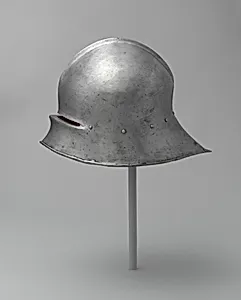
Step into the world of late medieval warfare with this exquisite *Sallet*, crafted around 1480 by the Austrian armorer Caspar R from Mühlau, near Innsbruck. This steel helmet, lined with leather and textiles like linen and cotton for comfort, exemplifies the pinnacle of 15th-century arms craftsmanship. Measuring just 9½ inches high and weighing a substantial 6 pounds 8, it was designed for mobility on the battlefield, its sleek, rounded shape deflecting blows while the extended tail protected the neck. Sallet helmets like this one rose to prominence in the Late Gothic period, favored by infantry and light cavalry across Europe during turbulent times, including conflicts with the Ottoman Empire. Rieder's work reflects the Tyrolean region's renown for high-quality armor production, where skilled smiths hammered and polished steel to balance protection, weight, and wearability. The meticulous construction—forged from thick steel plates riveted together—highlights advanced metallurgical techniques, ensuring durability without sacrificing the knightly elegance. A cherished gift to the Metropolitan Museum of Art in 1942, this sallet invites us to ponder the human stories behind the metal: the soldier who donned it, the clashes it endured. It's a testament to how arms and armor blended functionality with artistry, bridging the medieval world and the dawn of the Renaissance.