
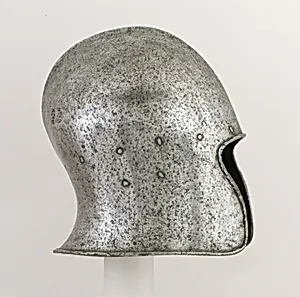
Sallet
Unknown Artist
ca. 1470–80
Medium
Steel
Dimensions
H. 10 3/4 in. (27.3 cm); W. 7 3/4 in. (19.7 cm); D. 10 1/4 in. (26 cm); Wt. 6 lb. 9.4 oz. (2988 g)
Classification
Helmets
Culture
Italian, Milan
Department
Arms and Armor
Museum
Metropolitan Museum of Art, New York, NY
Credit
Rogers Fund, 1904
Accession Number
04.3.232
Rights
Public Domain
Art Historical Context
Step into the world of Renaissance warfare with this exquisite *Sallet*, a steel helmet crafted in Milan, Italy, around 1470–80. Measuring just 10¾ inches high and weighing a manageable 6½ pounds, this open-faced helmet features a distinctive rounded skull, a protective tail (or *gola*) extending down the neck, and subtle shaping for the cheeks. Milan was Europe's premier hub for armorer craftsmanship during the late 15th century, where skilled *armaiuoli* produced gear blending functionality with elegant form for knights and condottieri mercenaries. Forged from high-quality steel, the sallet exemplifies the Milanese workshop's mastery of heat treatment and hammering techniques, creating a balance of lightness, strength, and mobility essential for combat on horseback or foot. Unlike heavier Gothic helmets from northern Europe, Italian sallets like this one prioritized visibility and ventilation, reflecting the tactical shifts of the Italian Wars era. Its smooth, polished surface hints at the armorer's precision, often finished with subtle fluting for added rigidity without excess weight. Acquired through the Rogers Fund in 1904, this helmet now graces the Metropolitan Museum of Art's Arms and Armor Department, offering a tangible link to the chivalric age. Imagine a Milanese soldier donning it amid the pageantry of a ducal court—protection as both shield and statement of status.