
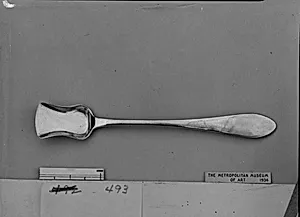
Salt Shovel
1770–1800
Medium
Silver
Dimensions
L. 4 in. (10.2 cm)
Classification
Salt Shovel
Culture
American
Department
The American Wing
Museum
Metropolitan Museum of Art, New York, NY
Credit
Bequest of Alphonso T. Clearwater, 1933
Accession Number
33.120.493
Rights
Public Domain
Art Historical Context
Nestled in The Metropolitan Museum of Art's Wing, *Salt Shovel* by Nehemiah Norcross (0–1800) the refined craftsmanship of early American silversmithing. Crafted from gleaming silver and measuring just 4 inches length, this delicate utensil was designed for serving salt at the dining table—a luxury item in colonial households where salt symbolized wealth and hospitality.cross, a skilled artisan likely working in New England, produced such pieces during a transformative era bridging the American Revolution and the early republic, when domestic silverware reflected emerging national pride and European influences. Silver salt shovels like this one were essential to formal table settings, often paired with ornate salt cellars to prevent clumping in humid climates. The medium's durability and luster made silver a status symbol, showcasing the silversmith's mastery of hammering, shaping, and polishing techniques. Bequeathed by Alphonso T. Clearwater in 1933, this artifact offers a tangible glimpse into 18th-century American daily life, where even mundane tasks were elevated by artistry. Today, it invites us to appreciate the quiet elegance of functional design, highlighting how everyday objects embodied cultural aspirations in a young nation.