
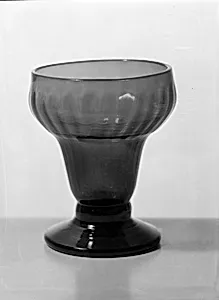
Saltcellar
Unknown Artist
1800–1900
Medium
Blown pattern-molded green glass
Dimensions
H. 6 3/4 in. (17.1 cm)
Classification
Saltcellar
Culture
American or British
Department
The American Wing
Museum
Metropolitan Museum of Art, New York, NY
Credit
The Sylmaris Collection, Gift of George Coe Graves, 1930
Accession Number
30.120.302
Rights
Public Domain
Art Historical Context
Nestled in the Metropolitan Museum of Art's American Wing, this elegant saltcellar from 1800–1900 the artistry of 19th-century blown pattern-molded green glass. Standing at a dainty 6 3/4 inches tall, the was crafted by shaping molten glass inside a patterned mold before free-blowing, creating textured, repeating motifs that catch the light beautifully. The soft green hue, often called "forest glass," results from natural impurities in the silica, lending it an earthy, organic charm typical of the era's utilitarian yet decorative tableware. Produced in either America or Britain during a boom in glass manufacturing, this saltcellar reflects the democratization of fine design for everyday use. Factories like those in New England or England's Midlands perfected these techniques, making ornate objects affordable for middle-class homes. Saltcellars held practical importance—salt was precious and often displayed in stylish containers at the table—blending function with subtle luxury. A generous gift from the Sylmaris Collection via George Coe Graves in 1930, this anonymous masterpiece invites us to appreciate the skilled hands behind forgotten workshops, evoking the warmth of Victorian-era dining.