
Salver
Medium
Silver
Dimensions
Overall: 1/2 × 11 in., 0.6 kg (1.3 × 27.9 cm, 1.3 lb.)
Classification
Metalwork-Silver
Culture
French, Marseilles (Aix Mint)
Department
European Sculpture and Decorative Arts
Museum
Metropolitan Museum of Art, New York, NY
Credit
Bequest of Catherine D. Wentworth, 1948
Accession Number
48.187.332
Rights
Public Domain
Art Historical Context
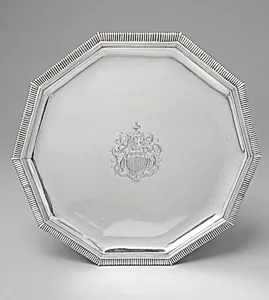
This elegant silver salver, crafted Jean-Joseph Gira in 1729, the refined metalwork of early 18th-century France Hailing from Marseilles under the Aix Mint, this shallow tray—measuring just half an inch high and 11 inches across—was designed for serving drinks or confections in affluent households. Weighing a substantial 1.3 pounds, its weight underscores the quality of the silver, a precious material symbolizing wealth and sophistication during the Regency period leading into Louis XV's reign. Giraud's craftsmanship reflects the provincial excellence of French silversmithing, where pieces from regional mints like Aix rivaled Parisian luxury goods. Techniques such as chasing and engraving likely adorned its surface, creating intricate patterns that blended Baroque exuberance with emerging Rococo lightness. Salvers like this were not mere utilitarian objects but status symbols, displayed on sideboards to impress guests and showcase the owner's taste. Now in the Metropolitan Museum of Art's European Sculpture and Decorative Arts collection, thanks to Catherine D. Wentworth's 1948 bequest, this salver offers a glimpse into the opulent domestic life of 18th-century Provence. Visitors can appreciate how such metalwork bridged functionality and artistry, preserving the legacy of French decorative traditions.