
Salver
ca. 1756
Medium
Silver
Dimensions
1 1/4 x 8 in., 9 oz. 19 dwt. (3.2 x 20.3 cm, 309.477 Grams)
Classification
Salver
Culture
American
Department
The American Wing
Museum
Metropolitan Museum of Art, New York, NY
Credit
Sansbury-Mills Fund, 2010
Accession Number
2010.197
Rights
Public Domain
Tags
Art Historical Context
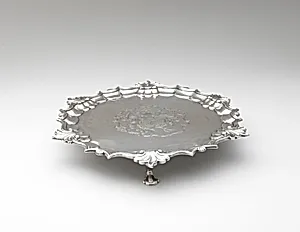
Behold the elegant *Salver* crafted by Nathaniel Hurd around 1756, a fine example of colonial American silverwork now housed in The Metropolitan Museum of Art's American Wing. Measuring just 1¼ x 8 inches and weighing nearly 10 ounces, this shallow trayknown as a salver designed for serving tea, wine, or delicacies in affluent households. Hurd, a skilled Boston silversmith and engraver, exemplifies the craftsmanship of pre-Revolutionary America, where such objects blended British influences with emerging local artistry. Forged from silver, the salver's medium was prized for its luster and durability, symbolizing wealth and refinement among the colonial elite. The prominent coat of arms, likely engraved on its surface, underscores its role as a heraldic heirloom, personalizing it for a specific family and affirming social status. Techniques like chasing and repoussé would have brought texture and depth, highlighting Hurd's mastery in transforming raw metal into functional luxury. This piece offers a glimpse into 18th-century American life, where silverware bridged utility and prestige. Acquired through the Sansbury-Mills Fund in 2010, it reminds us how everyday objects carried profound cultural weight, preserving identity amid a growing nation's aspirations.