
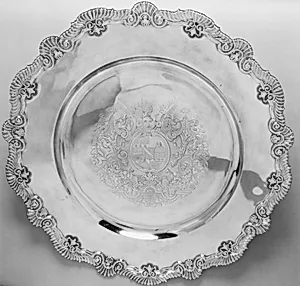
Salver
1710–11
Medium
Silver
Dimensions
Diameter: 24 in. (61 cm)
Classification
Metalwork-Silver
Culture
British, London
Department
European Sculpture and Decorative Arts
Museum
Metropolitan Museum of Art, New York, NY
Credit
Bequest of Irwin Untermyer, 1973
Accession Number
1974.28.169
Rights
Public Domain
Tags
Art Historical Context
Step into the opulent world of early 18th-century British with this magnificent *Salver* crafted by David Willaume I 1710–11. Measuring an impressive 24 inches (61 cm) in diameter this large silver tray—known as a salver—was designed for serving drinks or dishes at grand dinners, embodying the era's love for lavish hospitality. Willaume, a skilled Huguenot silvers who fled religious persecution in France to settle in London, brought exquisite continental techniques to British metalwork, elevating local craftsmanship during the reign of Queen Anne. The salver's surface proudly bears a coat of arms featuring lions, symbols of strength and nobility likely commissioned for a prominent family. Such heraldic engravings were hallmarks of status, transforming functional objects into heirlooms that displayed lineage and wealth. Willaume's mastery shines in the silver's gleaming finish and balanced proportions, hallmarks of London silver hallmarks from this period, ensuring purity and origin. Today, this treasure from the Metropolitan Museum of Art's European Sculpture and Decorative Arts collection, bequeathed by Irwin Untermyer in 1973, offers a window into Georgian domestic splendor. It reminds us how silverware like this bridged art and everyday elite life, blending utility with artistic grandeur.