
Sample
Unknown Artist
first half 19th century
Medium
Silk
Classification
Textiles-Woven
Culture
French
Department
European Sculpture and Decorative Arts
Museum
Metropolitan Museum of Art, New York, NY
Credit
Bequest of Maria P. James, 1911
Accession Number
11.60.488
Rights
Public Domain
Art Historical Context
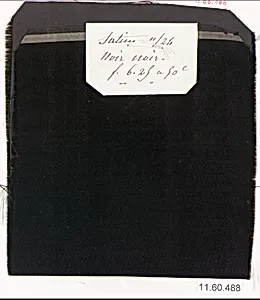
This delicate silk sample, woven in France during the first half of 19th century, a glimpse into the opulent world of European textile artistry. Classified as a woven textile and housed in the Metropolitan Museum of's Department of European Sculpture and Decor Arts, it exemplifies the craftsmanship of the era. Acquired through the bequest of Maria P. James in1911, this piece survives as a testament to the refinement of French luxury goods, when silk was prized for its luster, durability, and versatility in fashion furnishings. In 19th-century France, silk weaving reached new heights of innovation, particularly in centers like Lyon, where advances in loom technology enabled intricate patterns and vivid dyes. Though the artist remains unknown, the medium's woven structure highlights the technical precision required—warps and wefts interlaced to create sumptuous textures that adorned ball gowns, upholstery, and ecclesiastical vestments. Such samples were often produced by weavers to showcase designs for potential clients, bridging artistry and commerce. Today, this unassuming yet elegant fragment underscores the cultural significance of textiles as everyday art forms, reflecting France's enduring legacy in decorative arts. Visitors can appreciate how it captures the tactile beauty and economic vitality of an age defined by elegance and industry.