
Sampler
Unknown Artist
1782
Medium
Silk on canvas
Dimensions
41 1/2 in. × 9 in. (105.4 × 22.9 cm)
Classification
Textiles-Embroidered
Culture
Austrian
Department
European Sculpture and Decorative Arts
Museum
Metropolitan Museum of Art, New York, NY
Credit
Rogers Fund, 1913
Accession Number
13.122
Rights
Public Domain
Tags
Art Historical Context
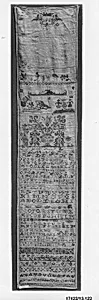
This exquisite silk-embroidered sampler, created in Austria in 1782, exemplifies the meticulous craft of 18th-century needlework. Measuring an elongated 41½ × 9 inches, its narrow band format was ideal for displaying a young woman's embroidery skills through rows of decorative motifs, including vibrant birds, blooming flowers, and a prominent of arms. Worked in fine silk threads on canvas—a durable ground favored for its weave that supported precise stitching—this piece belongs to the tradition of samplers as both educational tools and personal showcases. In late Enlightenment-era Austria, under Habsburg rule, samplers like this served as markers of feminine accomplishment, often stitched by girls aged 10 to 16 to master techniques such as cross-stitch, satin stitch, and outlining. The inclusion of heraldic elements suggests ties to a family of status, blending folk artistry with noble symbolism. Birds and flowers added naturalistic beauty, reflecting the era's fascination with nature amid rococo influences. Acquired through the Rogers Fund in 1913, this sampler now graces the Metropolitan Museum of Art's European Sculpture and Decorative Arts collection. It offers a intimate glimpse into domestic life, women's education, and cultural heritage, reminding us how everyday crafts preserved identity and skill across generations.