
Sampler
Unknown Artist
1837
Medium
Cotton and silk on linen
Dimensions
H. 13 3/4 x W. 8 1/2 inches (34.9 x 21.6 cm)
Classification
Textiles-Embroidered
Culture
Dutch or Belgian
Department
European Sculpture and Decorative Arts
Museum
Metropolitan Museum of Art, New York, NY
Credit
From the Collection of Mrs. Lathrop Colgate Harper, Bequest of Mabel Herbert Harper, 1957
Accession Number
57.122.111
Rights
Public Domain
Art Historical Context
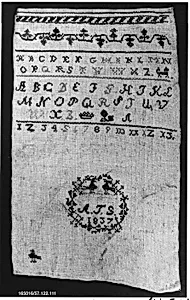
This delicate sampler, crafted in 1837 by an unknown Dutch or Belgian artist, exemplifies the embroidered textiles that were a cornerstone of 19th-century domestic education. Measuring just 13¾ x 8½ inches, it was likely stitched by a young girl as a showcase of her needlework skills—alphabets, motifs, and personal details often served as both a learning exercise and a future dowry piece. Produced during a time when Belgium had recently gained independence from the Netherlands (1830), such works reflect the cultural continuity of Flemish textile traditions amid political change. Worked in vibrant cotton and silk threads on a linen ground, the piece highlights masterful embroidery techniques like cross-stitch and satin stitch, which allowed for intricate patterns and durable finishes. Silk lent a luxurious sheen to finer elements, while cotton ensured practicality for everyday use. These samplers were more than craft; they embodied virtues of patience, piety, and proficiency valued in girls' upbringing. Now in the Metropolitan Museum of Art's European Sculpture and Decorative Arts Department, this sampler—bequeathed by Mabel Herbert Harper in 1957—offers a intimate glimpse into everyday artistry, preserving the anonymous talents of women in an era before formal recognition.