
Sampler
Unknown Artist
1790
Medium
Silk on linen
Dimensions
14 3/4 × 16 1/8 in. (37.5 × 41 cm)
Classification
Textiles-Embroidered
Culture
Dutch
Department
European Sculpture and Decorative Arts
Museum
Metropolitan Museum of Art, New York, NY
Credit
From the Collection of Mrs. Lathrop Colgate Harper, Bequest of Mabel Herbert Harper, 1957
Accession Number
57.122.127
Rights
Public Domain
Tags
Art Historical Context
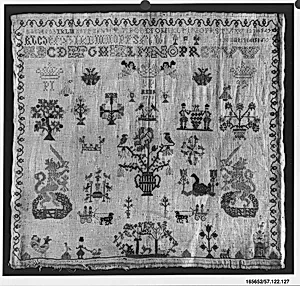
This exquisite silk-on-linen sampler, created by an unknown Dutch artist in 1790, the intricate world of 18th-century needlework. Measuring 14¾ × 16⅛ inches, it belongs to the tradition of samplers—embroidered panels crafted primarily by young women and girls to master stitching techniques and demonstrate proficiency. Common in Dutch households, these works often doubled as personal records of accomplishment, blending utility with artistry in the realm of decorative arts. Vibrant silk threads bring to life a lively menagerie of motifs: majestic lions symbolizing strength and nobility, graceful birds evoking freedom, blooming flowers representing beauty and abundance, and elegant carriages hinting at travel or social status. These embroidered elements showcase advanced techniques like satin stitch, chain stitch, and intricate shading, highlighting the maker's skill and creativity within a structured format. Housed in the Metropolitan Museum of Art's European Sculpture and Decorative Arts Department (gift from the Collection of Mrs. Lathrop Colgate Harper, 1957), this sampler offers a window into Dutch domestic life during the late Enlightenment era. It reflects the cultural emphasis on women's education through crafts, preserving motifs that bridged everyday symbolism with artistic expression for generations.