
Sampler
Unknown Artist
1825
Medium
Cotton and silk on hemp canvas
Dimensions
H. 12 5/8 x W. 17 inches (32.1 x 43.2 cm)
Classification
Textiles-Embroidered
Culture
British
Department
European Sculpture and Decorative Arts
Museum
Metropolitan Museum of Art, New York, NY
Credit
From the Collection of Mrs. Lathrop Colgate Harper, Bequest of Mabel Herbert Harper, 1957
Accession Number
57.122.352
Rights
Public Domain
Art Historical Context
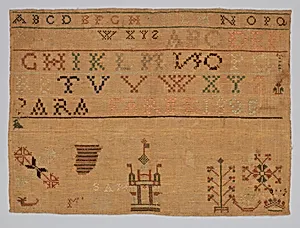
This delicate 1825 British sampler, crafted by an unknown artist, exemplifies the educational needlework tradition popular among young girls in early 19th-century England Measuring 12⅝ × 17 inches, it is embroidered with cotton and silk threads on a sturdy hemp canvas—a practical choice for practice pieces that showcased a pupil's mastery of stitches and patterns. Samplers like this served as both skill-building exercises and personal records, often featuring alphabets, numbers, borders, and motifs to prepare girls for domestic life. Embroidered textiles held profound cultural importance in Regency-era Britain, blending artistry with moral instruction. Girls as young as seven would spend months creating these works under the guidance of teachers or family, demonstrating virtues like diligence and piety through intricate designs. The use of vibrant silk and cotton highlights the era's access to fine materials, reflecting middle-class aspirations amid the Industrial Revolution's social shifts. Today, housed in the Metropolitan Museum of Art's European Sculpture and Decorative Arts Department (bequest of Mabel Herbert Harper, 1957), this sampler offers a window into women's hidden contributions to art and education, preserving a tactile link to everyday creativity from two centuries past.