
Sampler
Unknown Artist
1754
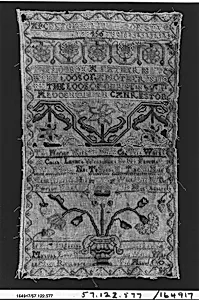
Medium
Silk on linen
Dimensions
16 1/2 in. × 10 in. (41.9 × 25.4 cm)
Classification
Textiles-Embroidered
Culture
American
Department
European Sculpture and Decorative Arts
Museum
Metropolitan Museum of Art, New York, NY
Credit
From the Collection of Mrs. Lathrop Colgate Harper, Bequest of Mabel Herbert Harper, 1957
Accession Number
57.122.577
Rights
Public Domain
Tags
Art Historical Context
This exquisite silk-on-linen sampler, created in 1754 by an unknown American artist, exemplifies the colonial era's tradition of embroidered textiles. Measuring 16½ × 10 inches, it features delicate floral motifs—a common tag for such works—stitched with vibrant silk threads a sturdy linen ground. Samplers like this were prized decorative arts, blending utility and artistry in household settings. In 18th-century America, girls crafted samplers as essential lessons in needlework, literacy, and piety. Often including alphabets, numbers, or moral verses alongside blooming flowers symbolizing virtue and abundance, these pieces showcased a maker's skill and served as family heirlooms. This example, classified as embroidered textiles in the Metropolitan Museum of Art's European Sculpture and Decorative Arts department, reflects the cultural fusion of European techniques with emerging American identity. Its bequest from Mabel Herbert Harper in 1957 preserves a glimpse into everyday colonial life, highlighting women's roles in domestic creativity. A charming window into pre-Revolutionary handiwork!