
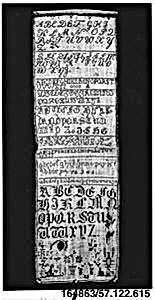
Sampler
Unknown Artist
19th century
Medium
Silk and cotton on cotton
Dimensions
H. 28 1/4 x W. 8 1/2 inches (71.8 x 21.6 cm)
Classification
Textiles-Embroidered
Culture
German
Department
European Sculpture and Decorative Arts
Museum
Metropolitan Museum of Art, New York, NY
Credit
From the Collection of Mrs. Lathrop Colgate Harper, Bequest of Mabel Herbert Harper, 1957
Accession Number
57.122.615
Rights
Public Domain
Art Historical Context
This exquisite 19th-century German, crafted by an unknown artist, exemplifies the educational and decorative textile traditions of Europe. Samplers like this were typically stitched by young girls as part of their domestic training, serving as both skill-building exercises and personal showcases of embroidery prowess. Measuring 28¼ x 8½ inches, its narrow, elongated format—common for these works—allowed it to be rolled or framed for display, blending utility with artistry in the home. Embroidered with vibrant silk and sturdy cotton threads on a cotton ground, the piece highlights masterful needlework techniques such as cross-stitch, satin stitch, or chain stitch, which created intricate patterns, alphabets, motifs, or verses. Silk added luster and fine detail, while cotton ensured longevity, reflecting the era's blend of imported luxury materials and everyday fabrics. In German culture, such samplers held deep significance, symbolizing virtues like diligence, piety, and marital readiness, often prepared for dowries. Now housed in the Metropolitan Museum of Art's Department of European Sculpture and Decorative Arts, this sampler—bequeathed by Mabel Herbert Harper in 1957—offers a window into 19th-century domestic life, preserving the anonymous creativity of everyday women in a male-dominated art world.