
Sampler
Unknown Artist
19th century
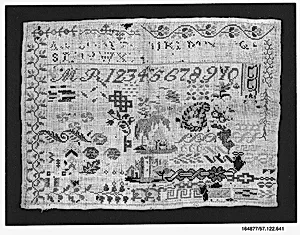
Medium
Silk and metal thread on wool canvas
Dimensions
H. 9 3/8 x W. 12 1/4 inches (23.8 x 31.1 cm)
Classification
Textiles-Embroidered
Culture
German
Department
European Sculpture and Decorative Arts
Museum
Metropolitan Museum of Art, New York, NY
Credit
From the Collection of Mrs. Lathrop Colgate Harper, Bequest of Mabel Herbert Harper, 1957
Accession Number
57.122.641
Rights
Public Domain
Art Historical Context
This delicate 19th-century German, embroidered with silk and shimmering metal threads on a wool canvas, exemplifies the artistry of domestic needlework from the era. Measuring just 9⅜ × 12¼ inches, it belongs to a tradition where young girls practiced stitching skills, often creating these panels as both educational exercises and personal showcases. The use of luxurious metal threads alongside silk highlights advanced techniques, lending a touch of opulence to what was typically a humble craft. In 19th-century Germany, samplers held deep cultural significance, serving as markers of a girl's readiness for homemaking and marriage. They commonly featured alphabets, numerals, pious mottos, and intricate motifs like flowers or birds—symbols of virtue, fertility, and faith—reflecting the era's emphasis on moral education and gender roles within bourgeois families. Though the artist remains unknown, the precision of the embroidery speaks to disciplined training and creativity. Now part of the Metropolitan Museum of Art's European Sculpture and Decorative Arts collection, gifted through the bequest of Mabel Herbert Harper in 1957, this piece invites visitors to appreciate the overlooked mastery of women's handiwork, bridging everyday life with enduring artistic legacy.