
Sampler
Unknown Artist
19th century
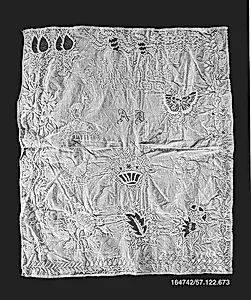
Medium
Cotton on cotton
Dimensions
H. 16 1/2 x W. 14 5/8 inches 41.9 x 37.1 cm
Classification
Textiles-Embroidered
Culture
German
Department
European Sculpture and Decorative Arts
Museum
Metropolitan Museum of Art, New York, NY
Credit
From the Collection of Mrs. Lathrop Colgate Harper, Bequest of Mabel Herbert Harper, 1957
Accession Number
57.122.673
Rights
Public Domain
Tags
Art Historical Context
This charming 19th-century German sampler, embroidered in cotton on cotton, exemplifies educational craft traditions of young women in Europe. Measuring 16½ x 14⅝ inches, it belongs to a long lineage of samplers—handstitched panels created as both skill-building exercises and personal records of accomplishment. Likely made by a girl or young woman, it reflects the domestic arts central to 19th-century German culture where embroidery taught patience, precision, and creativity while preparing makers for household roles. The design bursts with lively motifs, including human figures, chickens, dogs, and butterflies, rendered in colorful threads against a cotton ground. These elements—common in samplers—blend whimsy with symbolism: animals often represented rural life and nature's harmony, while figures might nod to family or biblical themes. Techniques like cross-stitch or satin stitch would have showcased the maker's mastery of varied stitches, turning functional practice into folk art treasures. Housed in the Metropolitan Museum of Art's European Sculpture and Decorative Arts Department, this piece from the bequest of Mabel Herbert Harper in 1957 offers a window into everyday creativity. It reminds us how textiles preserved personal stories, bridging utility and beauty in 19th-century homes.