
Sampler
Unknown Artist
19th century
Medium
Cotton, crochet
Dimensions
L. 63 1/4 x W. 3 5/8 inches 160.7 x 9.2 cm
Classification
Textiles-Laces
Culture
German
Department
European Sculpture and Decorative Arts
Museum
Metropolitan Museum of Art, New York, NY
Credit
From the Collection of Mrs. Lathrop Colgate Harper, Bequest of Mabel Herbert Harper, 1957
Accession Number
57.122.714
Rights
Public Domain
Art Historical Context
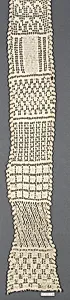
This exquisite 19th-century German sampler, crafted from cotton using crochet techniques, exemplifies the meticulous artistry of European lace-making traditions. Measuring an impressive 63¼ x 3⅝ inches (160.7 x 9.2 cm), its long, narrow form suggests it as a practical demonstration strip—perhaps for edgings, insertions, or bookmarks—showcasing a variety of stitches in a delicate lace-like fabric. Housed in the Metropolitan Museum of Art's Department of European Sculpture and Decor Arts, it entered the collection through the generous bequest of Mabel Herbert Harper in 1957, from her mother Mrs. Lathrop Colgate Harper. Samplers like this were more than mere practice pieces; they were vital records of needlework skills, often created by young women to display proficiency in domestic arts. In 19th-century Germany, crochet emerged as an accessible alternative to expensive needle laces, allowing makers to replicate intricate patterns with a single hook and thread. This textile highlights the era's emphasis on handcrafts amid industrialization, blending utility with ornamental beauty. Though the artist remains unknown, the sampler's precision speaks to cultural values of patience and creativity, offering visitors a tactile glimpse into everyday artistry that adorned homes across Europe. A true treasure of textile history!