
Sampler
1713
Medium
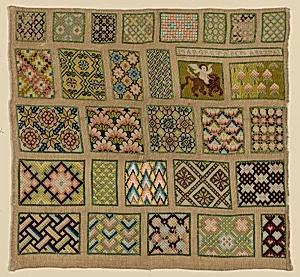
Linen, plain weave; with twenty nine squares filled with different needlework patterns in a variety of stitches
Dimensions
37.3 × 39.4 cm (14 5/8 × 15 1/2 in.)
Classification
textile
Department
Textiles
Museum
Art Institute of Chicago
Accession Number
35582
Rights
Public Domain
Art Historical Context
Created in 1713 by Margreta Bem this exquisite *Sampler* is a testament to the artistry and skill of early 18th-centurywork. Measuring 37.3 × 39.4 cm, it a plain-weave linen ground adorned with twenty-nine distinct squares, each filled with unique patterns executed in a variety of stitches.oused in the Textiles Department of the Art Institute of Chicago, piece exemplifies the sampler tradition, where young women practiced and displayed their embroidery techniques. Samplers like this one held profound cultural and educational significance, serving as personal "textbooks" for girls learning domestic arts essential for household management and future homemaking. By 1713, in Europe—likely the maker's Dutch or Germanic context given her name—these works had evolved from simple alphabets to complex showcases of motifs, borders, and stitches, blending utility with creativity. Margreta's sampler reflects this pedagogical purpose, systematically demonstrating her mastery over diverse needlework methods. Artistically, the grid of twenty-nine squares highlights the precision and versatility of period embroidery, from delicate fillings to bold patterns. As a preserved artifact, it offers a rare glimpse into women's lived experiences, transforming everyday linen into a durable record of talent and tradition that captivates modern viewers.