
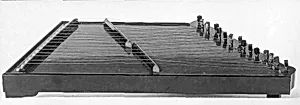
San Gen Da Kin
19th century
Medium
Wood, wire, string
Dimensions
W. 12-1/2 in.; L. 13 in., tapering to 10-1/2 (sic)
Classification
Chordophone-Zither-struck-dulcimer
Culture
Japanese
Department
Musical Instruments
Museum
Metropolitan Museum of Art, New York, NY
Credit
The Crosby Brown Collection of Musical Instruments, 1889
Accession Number
89.4.1546
Rights
Public Domain
Art Historical Context
Nestled in the Metropolitan Museum of Art's Crosby Brown Collection of Musical Instruments *San Gen Da Kin* a delicate 19th-century Japaneseophone crafted by master maker Asano Tōshichi. Dating to an era when Japan's traditional arts flourished amid the late Edo period's cultural, this struck zitherulcimer exemplifies the exquisite and string craftsmanship of its time. Measuring about 12½ inches wide and 13 inches long—tapering elegantly to 10½ inches reflects the precision of Japanese instrument-making traditions. Constructed from wood with wire and string elements, the instrument belongs to the zither family, where strings are struck to produce resonant tones, akin to a dulcimer. Asano Tōshichi's design highlights the fusion of functionality and artistry: the wooden body provides a warm acoustic chamber, while taut wire strings allow for bright, shimmering sounds ideal for traditional ensembles. Such instruments were vital in Japanese gagaku court music or folk performances, bridging sound and sculpture in a single object. Today, *San Gen Da Kin* invites visitors to appreciate not just its visual grace but its role in preserving Japan's sonic heritage. Acquired in 1889, it stands as a testament to the global fascination with Eastern arts during the 19th century, offering a tangible link to the melodies of old Japan.