
Sanxian (三弦 )
Unknown Artist
ca. 1900
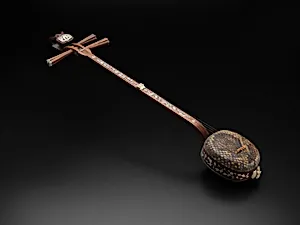
Medium
rosewood, mother-of-pearl, snake skin, ivory
Dimensions
L. 32 3/8 × W. 5 3/8 in. (82.2 × 13.7 cm)
Classification
Chordophone-Lute-plucked-unfretted
Culture
Chinese
Department
Musical Instruments
Museum
Metropolitan Museum of Art, New York, NY
Credit
Gift of Estate of Mrs. Alexander Glass, 1944
Accession Number
44.51.1
Rights
Public Domain
Art Historical Context
Behold the Sanxian (三弦), a captivating three-stringed lute from late Qing dynasty China, circa 190. This exquisite chordophone, classified as a plucked unfretted lute, measures an elegant 32⅜ inches in length, crafted from rich rosewood for its resonant body. Its soundboard gleams with snake skin, prized for its tight vibration that produces the instrument's distinctive bright, nasal tone, while mother-of-pearl inlays add shimmering decorative flair, and ivory accents highlight fine details like tuning pegs. Central to Chinese folk traditions, narrative singing (such as Jiangnan sizhu or regional operas), and ensemble music, the Sanxian embodies the artistry of anonymous craftsmanship. Players slide a bamboo plectrum along its fretless neck to bend notes expressively, evoking emotion in storytelling performances. Dating to the Ming dynasty but refined by the 19th century, this example reflects the fusion of functionality and beauty in Chinese musical culture, where instruments doubled as status symbols. Generously gifted to the Metropolitan Museum of Art in 1944 from the Estate of Mrs. Alexander Glass, this Sanxian invites visitors to imagine the lively teahouses and stages of early 20th-century China, where its twangy strains wove tales of love, heroism, and daily life.