
Sari Border
Unknown Artist
17th century
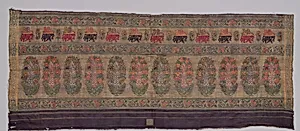
Medium
Silk, metal wrapped thread; double weave with supplementary twill, brocaded
Dimensions
Textile: L. 17 1/2 in. (44.5 cm) W. 41 in. (104.1 cm)
Classification
Textiles-Costumes
Department
Islamic Art
Museum
Metropolitan Museum of Art, New York, NY
Credit
Rogers Fund, 1928
Accession Number
28.50
Rights
Public Domain
Tags
Art Historical Context
This exquisite *Sari Border* from 17th century showcases the opulent textile artistry of the Islamic world, likely produced in Mughal India during the empire's golden age. Crafted from lustrous silk and shimmering metal-wrapped threads, border fragment measures an impressive 17½ by 41 inches, designed to adorn the edge of a sari—a traditional draped garment symbolizing elegance and status for women. Vibrant motifs of majestic elephants and blooming flowers evoke the natural splendor and royal symbolism prevalent in Persianate court culture, where elephants represented power and prosperity. The textile's technical mastery lies in its double weave structure, which creates a reversible fabric with two interconnected layers for durability and depth, enhanced by supplementary twill and brocading techniques. Brocading involves floating extra metallic threads to form raised, glittering patterns, adding a tactile luxury that would catch the light during wear. These methods highlight the skill of anonymous weavers, whose innovations in loom technology produced some of the world's finest textiles. Acquired through the Rogers Fund in 1928 and housed in the Metropolitan Museum of Art's Islamic Art Department, this piece offers a window into 17th-century cultural exchange along trade routes, blending Indian craftsmanship with Islamic decorative traditions. Visitors can appreciate how such borders transformed everyday attire into wearable art, reflecting the era's blend of beauty, spirituality, and imperial grandeur.