
Saturnus
ca. 1652 - ca. 1653
Medium
terracotta
Dimensions
86; 48
Rights
Public Domain
About this artwork
terracotta
Art Historical Context
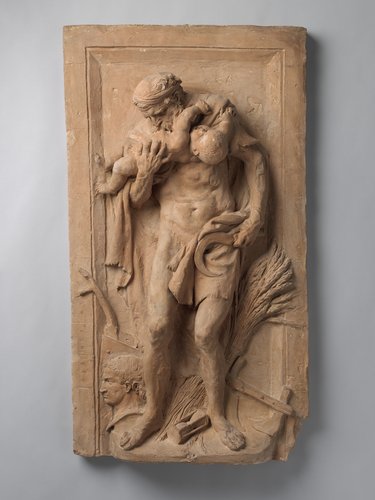
**Saturnus** by Artus Quellinus (I), crafted around 1652–1653, is a striking terracotta sculpture measuring 86 cm in height and 48 cm in width. Quellinus, a leading Flemish sculptor of the Baroque era, was renowned for his dynamic contributions to Antwerp's architectural decorations, including grand fountains, tombs, and pediments. This piece captures the mythological figure of Saturnus—the Roman god of time and agriculture, often depicted with a scythe—embodying the era's fascination with classical antiquity revived through dramatic, emotive forms. Terracotta, a fired clay medium, held special significance in 17th-century sculpture workshops. Quellinus likely used it as a *bozzetto*, a preparatory model to refine ideas before executing in more durable marble or bronze. The material's malleability allowed for fluid modeling, evident in the sculpture's expressive surfaces that convey Baroque vitality: swirling drapery, tensed musculature, and intense gazes that draw viewers into the god's brooding power. This technique bridged sketch and masterpiece, offering insights into the artist's creative process. In the context of Flanders' Golden Age, influenced by masters like Peter Paul Rubens, **Saturnus** reflects the period's blend of Northern realism and Italianate grandeur. Displayed today, it invites us to ponder time's relentless march, a timeless theme rendered with Quellinus's masterful touch—perfect for contemplating in our virtual gallery. (198 words)