
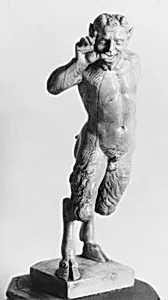
Satyr
Unknown Artist
17th century
Medium
Ivory
Dimensions
Height: 7 in. (17.8 cm)
Classification
Sculpture-Miniature
Culture
Flemish
Department
European Sculpture and Decorative Arts
Museum
Metropolitan Museum of Art, New York, NY
Credit
Bequest of Mary Clark Thompson, 1923
Accession Number
24.80.83
Rights
Public Domain
Tags
Art Historical Context
Nestled in the Metropolitan Museum of Art's European Sculpture and Decorative collection, this enchanting miniature ivory sculpture titled *Satyr* hails from 17th-century Flanders. Carved by an unknown artist a modest height of 7 inches17.8 cm), it depicts the lively mythological figure—a half-man, half-goat creature from Greek lore, symbolizing revelry, nature, andamed desires. Such satyrs were popular motifs in Baroque-era art, blending classical mythology with the era's exuberant style. Ivory's creamy smoothness made it ideal for miniature sculptures like this, prized by collectors for their intricate detailing and portability. Flemish artisans excelled in this technique during the 17th century, producing finely wrought figures for cabinets of curiosities or private display. The material's translucency and carvability allowed for dynamic poses and expressive features, turning small objects into virtuoso displays of skill. Bequeathed to the Met in 1923 by Mary Clark Thompson, this piece exemplifies the cultural allure of Flemish decorative arts—elegant yet whimsical treasures that bridged mythology and everyday opulence, inviting viewers to marvel at their delicate craftsmanship up close.