
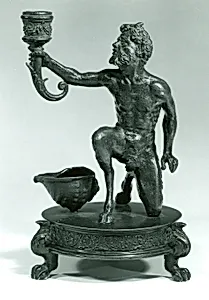
Satyr
Medium
Copper alloy with a reddish brown patina; the base and shell with a dark brown patina.
Dimensions
H. 25 cm.
Classification
Metalwork-Bronze
Department
Robert Lehman Collection
Museum
Metropolitan Museum of Art, New York, NY
Credit
Robert Lehman Collection, 1975
Accession Number
1975.1.1395
Rights
Public Domain
Tags
Art Historical Context
This delightful bronze *Satyr*, crafted around 1530 by the Italian masters Desiderio da and Severo Calzetta da Ravenna, captures the spirit of Renaissance mythology. Standing just 25 cm tall, the figure is cast in copper alloy, developing its characteristic reddish-brown patina over time—while the base and shell exhibit a darker brown hue. These small-scale bronzes were prized collector's items among Renaissance elites, blending classical antiquity with virtuoso metalworking techniques like lost-wax casting, which allowed for intricate details in the satyr's muscular form, horns, and mischievous expression. Satyrs, drawn from Greek lore as half-man, half-goat companions of Dionysus, symbolized wild revelry and nature's untamed joys—a theme revived during Italy's Renaissance to celebrate humanism and the antique past. Desiderio and Severo, active in northern Italy, excelled in such figural bronzes, their dynamic poses echoing the energetic style of contemporaries like Giambologna. The varied patinas not only enhance the sculpture's tactile allure but also highlight the era's mastery of alloy chemistry for enduring, lifelike finishes. Housed in the Robert Lehman Collection at The Metropolitan Museum of Art since 1975, this *Satyr* invites visitors to ponder the Renaissance fascination with myth, inviting a touch of ancient mischief into modern contemplation.