
Satyr and Nymph
Medium
oil paint (paint)
Dimensions
h 104cm × w 131cm
Classification
painting
Museum
Rijksmuseum, Amsterdam
Rights
Public Domain
About this artwork
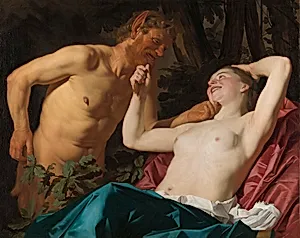
Een lachende nimf trekt een sater bij zijn sik naar zich toe, terwijl zij met ontbloot bovenlichaam voor hem ligt.
Art Historical Context
Gerard van Honthorst's *Satyr and Nymph* (1623) captures a playful yet sensual moment from classical mythology. In this oil painting, measuring 104 x 131 cm, a nymph with her upper body bare reclines seductively, tugging a bearded satyr toward her by his chin. The Utrecht-born artist, a leading figure in the Dutch Golden and a master of Caravaggesque tenebrism, infuses the scene with vibrant energy and intimate drama. Honthorst, nicknamed "Gherardo delle Notti" for his nocturnal candlelit works, trained in Italy under Caravaggio's influence, bringing dramatic chiaroscuro—strong contrasts of light and shadow—to the Northern Netherlands. Created around 1623, this piece reflects the era's fascination with mythological subjects, blending classical lore with Baroque sensuality. Satyrs, half-man half-goat creatures symbolizing untamed desire, and nymphs, ethereal nature spirits, were popular motifs evoking themes of lust and fleeting pleasure. Housed in the Rijksmuseum, the painting showcases Honthorst's skill in flesh tones and expressive faces, inviting viewers to ponder the timeless dance between human impulse and divine beauty. A delightful glimpse into 17th-century Dutch artistry.