
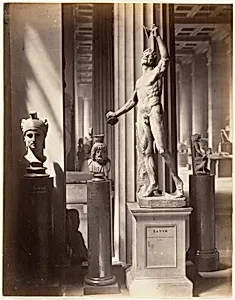
Satyr, British Museum
1869–72
Medium
Albumen silver print from glass negative
Dimensions
Image: 28 x 21.8 cm (11 x 8 9/16 in.)
Classification
Photographs
Department
Photographs
Museum
Metropolitan Museum of Art, New York, NY
Credit
Gilman Collection, Purchase, The Horace W. Goldsmith Foundation Gift, through Joyce and Robert Menschel, 2005
Accession Number
2005.100.510
Rights
Public Domain
Tags
Art Historical Context
In the heart of the British Museum, photographer Stephen Thompson captured this striking image of a satyr statue between 1869 and 1872. Titled *Satyr, British Museum*, the albumen silver print showcases a classical marble figure of the mythological creature—half-man, half-goat, symbolizing revelry and nature's wild spirit from ancient Greek lore. Thompson, a pioneering Victorian photographer, specialized in documenting museum collections, bringing the grandeur of antiquity to a wider audience at a time when photography was revolutionizing art preservation and study. The medium, an albumen silver print made from a glass negative, exemplifies 19th-century photographic innovation. Albumen, derived from egg whites, coated paper to produce rich tones and fine detail, ideal for reproducing sculpture's textures and shadows. At 28 x 21.8 cm, this intimate yet precise image highlights the satyr's muscular nude form against the museum's ornate interior, blending classical sculpture with emerging photographic realism. This work from the Met's Gilman Collection underscores photography's role in democratizing art history. It invites us to ponder the satyr's enduring allure—mischievous companion to Dionysus—while celebrating Thompson's skill in transforming stone into a living, light-captured moment. A testament to Victorian fascination with the classical past.