
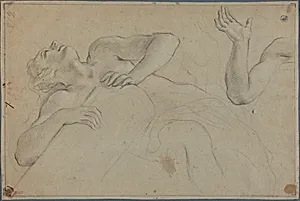
Satyr Leaning on a Column
1651 to 1700
Medium
black and white chalk
Dimensions
overall: 39 x 26 cm (15 3/8 x 10 1/4 in.)
Classification
Drawing
Department
CG-E
Museum
National Gallery of Art, Washington, D.C.
Credit
Ailsa Mellon Bruce Fund
Accession Number
1985.17.1
Rights
Public Domain
Art Historical Context
In the National Gallery of Art's collection, *Satyr Leaning on a Column* by Anton Domenico Gabbiani (1652–1726) captures the playful spirit of late Baroque Italy. Created sometime between 1651 and 1700, this intimate drawing depicts a mythological satyr—a mischievous, half-human, half-goat figure from classical antiquity—lounging against a stone column. Gabbiani, a Florentine artist favored by the Medici court, often explored such lively subjects in his preparatory sketches, blending whimsy with anatomical precision. Executed in black and white chalk on paper (39 x 26 cm), the medium shines here for its versatility. Black chalk defines bold contours and deep shadows, while white heightens luminous highlights, creating a sculptural sense of volume and texture reminiscent of three-dimensional marble. This technique was prized in 17th-century Italy for studies that bridged drawing and painting, allowing artists like Gabbiani to experiment before grand commissions. Though likely a standalone study, the work reflects Baroque fascination with antiquity and movement, evoking the exuberant gardens and villas of Renaissance Florence. Acquired through the Ailsa Mellon Bruce Fund, it invites visitors to appreciate the artistry behind the spectacle— a charming window into an era of opulent patronage and mythological revival.