
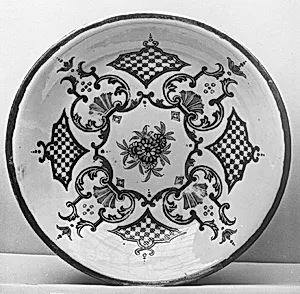
Saucer
Medium
Hard-paste porcelain
Dimensions
H. 1-1/8 in. (2.9 cm.); Diam. 5-7/16 in. (13.8 cm.)
Classification
Ceramics-Porcelain
Culture
Austrian, Vienna
Department
European Sculpture and Decorative Arts
Museum
Metropolitan Museum of Art, New York, NY
Credit
Rogers Fund, 1940
Accession Number
40.65.2
Rights
Public Domain
Tags
Art Historical Context
This delicate saucer, crafted during Vienna's Claudius Innocentius du Paquier period around 1730–35, exemplifies early European mastery of hard-paste porcelain. Founded in 1718 by entrepreneur du Paquier, the Vienna manufactory was among the first outside Asia to produce this prized material—fired at high temperatures to create a translucent, durable body rivaling Chinese imports. Measuring just 1-1/8 inches high and 5-7/16 inches in diameter, it was designed for elegant table service, reflecting the opulent tastes of the Austrian aristocracy under Habsburg rule. The saucer's floral motifs, vividly rendered in overglaze enamels, capture the budding Rococo style's love for nature's whimsy and intricate detail. Hard-paste porcelain allowed for finer modeling and brighter colors than softer European alternatives, making pieces like this coveted luxury goods exported across Europe. Its subtle elegance highlights Vienna's brief but brilliant porcelain era, which ended in 1744 when the factory was absorbed by the royal Hofburg manufactory. Today, this saucer graces the Metropolitan Museum of Art's European Sculpture and Decorative Arts collection, acquired via the Rogers Fund in 1940. It invites us to appreciate not just its beauty, but the ingenuity that brought Eastern ceramic secrets to the West.