
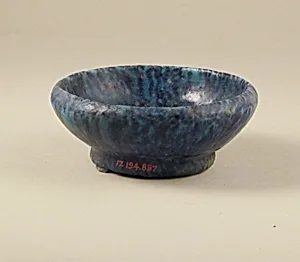
Saucer
Unknown Artist
Medium
Terracotta
Dimensions
1 1/8in. (2.8cm) Other: 2 7/8in. (7.4cm)
Classification
Vases
Culture
Roman
Department
Greek and Roman Art
Museum
Metropolitan Museum of Art, New York, NY
Credit
Gift of J. Pierpont Morgan, 1917
Accession Number
17.194.887
Rights
Public Domain
Tags
Art Historical Context
This delicate terracotta saucer, a modest yet evocative artifact from ancient Rome, exemplifies the everyday pottery that shaped daily life in the classical world. Measuring just 1 1/8 inches (2.8 cm) in height and 2 7/8 inches (7.4 cm) across, its simple, shallow form—classified among vases—suggests practical use for serving sauces, offerings, or small portions of food and drink. Crafted from fired clay, terracotta was the workhorse medium of Roman artisans, prized for its affordability, durability, and subtle earthy warmth. In Roman culture, such saucers were ubiquitous in households, taverns, and temples, bridging the mundane and the ritual. Though the artist and exact date remain unknown, this piece reflects the standardized techniques of Roman potters: wheel-thrown forms, smoothed surfaces, and unglazed finishes that highlighted the clay's natural texture. Its presence in the Metropolitan Museum of Art's Greek and Roman Art Department underscores its value as a window into ordinary Roman aesthetics and domestic habits. Generously gifted by J. Pierpont Morgan in 1917, this saucer invites us to ponder the uncelebrated hands that shaped it—reminding visitors that even the smallest objects carry the echoes of an empire's vibrant routine.