
Saucer
Unknown Artist
19th century
Medium
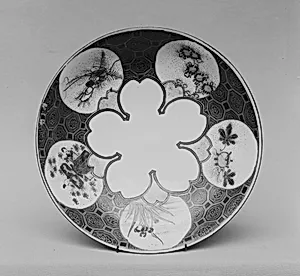
White porcelain decorated with red and gold (Hizen ware, Kutani type)
Dimensions
Diam. 5 1/8 in. (13 cm)
Classification
Ceramics
Culture & Period
Japan · Edo period (1615–1868)
Department
Asian Art
Museum
Metropolitan Museum of Art, New York, NY
Credit
Gift of Charles Stewart Smith, 1893
Accession Number
93.3.100
Rights
Public Domain
Art Historical Context
This elegant saucer, produced in 19th-century Japan during Edo period (1615–1868), captures the refined beauty of Hizen ware porcelain executed in the bold Kutani style. Measuring a modest 5⅛ inches (13 cm) in diameter its pristine white body is vibrantly decorated with flowing motifs of flowers and leaves rich red and gold enam. These overglaze colors, applied after firing and refired at lower temperatures, exemplify the technical innovation of Japanese potters who perfected durable, luminous designs inspired by nature. Hizen ware, originating from kilns in present-day Saga Prefecture (formerly Hizen Province), marked Japan's porcelain golden age, with production centers like Arita rivaling Chinese imports for export to Europe and domestic elite use. The Kutani type brought exuberant polychrome flair—especially the signature aka-e red painting—to functional ceramics like saucers, which often graced tea sets for chanoyu ceremonies or dining. Such pieces blended utility with artistry, reflecting Edo-era prosperity and a cultural reverence for seasonal flora. A generous gift to the Metropolitan Museum of Art from Charles Stewart Smith in 1893, this saucer invites visitors to appreciate the enduring allure of Japanese ceramics, where everyday objects transcend into treasures of color, craft, and harmony.