
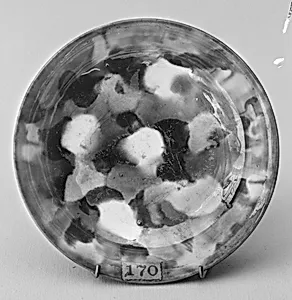
Saucer
Unknown Artist
early 18th century
Medium
Porcelain painted with polychrome enamels over the biscuit and white glaze (Jingdezhen ware)
Dimensions
Diam. 3 3/4 in. (9.5 cm)
Classification
Ceramics
Culture & Period
China · Qing dynasty (1644–1911), Kangxi period (1662–1722)
Department
Asian Art
Museum
Metropolitan Museum of Art, New York, NY
Credit
Purchase by subscription, 1879
Accession Number
79.2.1130
Rights
Public Domain
Art Historical Context
This delicate saucer, crafted in Jingdezhen—the renowned porcelain capital of China—dates to the early 18th during the Kangxi period1662–1722 of the Qing dynasty. just 3 3/4 inches in diameter it exemplifies the exquisite finesse of imperial-era ceramics, likely used for tea drinking or as part of a matching set in elite households. The Kangxi reign marked a golden age for Chinese porcelain, with Jingdezhen kilns producing wares of unparalleled quality for both domestic use and export to Europe and beyond. The saucer's medium is porcelain painted with vibrant polychrome enamels applied over a biscuit (unglazed, matte-fired body) and a smooth white glaze. This innovative technique allowed artisans to achieve rich, lasting colors that wouldn't fade under heat or handling, showcasing advanced mastery of firing processes. Multiple layers of glaze and enamel firing created a luminous, jewel-like surface, distinguishing Kangxi wares from earlier Ming dynasty pieces. Acquired by the Metropolitan Museum of Art through public subscription in 1879, this saucer highlights the global fascination with Chinese porcelain in the 19th century. It invites us to appreciate the cultural bridge between East and West, where everyday objects embodied artistic excellence and imperial sophistication.