
Saucer
Unknown Artist
Medium
Porcelain painted in underglaze blue
Dimensions
H. 3/4 in. (1.9 cm); Diam. of foot: 2 5/8 in. (6.7 cm); Diam. of rim: 4 1/2 in. (11.4 cm)
Classification
Ceramics
Culture & Period
China · Qing dynasty (1644–1911)
Department
Asian Art
Museum
Metropolitan Museum of Art, New York, NY
Credit
Purchase by subscription, 1879
Accession Number
79.2.226
Rights
Public Domain
Tags
Art Historical Context
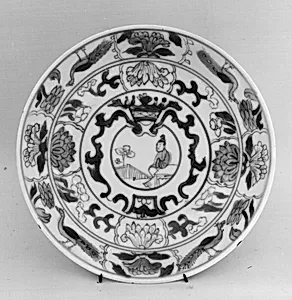
This delicate porcelain saucer, crafted during China's Qing dynasty (16441911), exemplifies the's mastery of blue-and-white ceramics. Measuring just 3/4 inch high with a 4 1/2-inch rim, it was designed for everyday use—likely as part of a tea or dining set—yet its refined form elevates it to artistic treasure. Acquired by the Metropolitan Museum of Art public subscription in 1879 it entered Western collections early, reflecting global admiration for Chinese porcelain. The saucer's surface features underglaze blue painting, a technique perfected in China since the 14th century. Cobalt pigment is applied to the unfired porcelain body before a transparent glaze, then fired at intense heat (around 2,400°F), yielding vibrant, enduring blues impervious to wear. Motifs of human figures, peacocks, and flowers adorn it; peacocks symbolize beauty, dignity, and immortality in Chinese culture, while flowers evoke prosperity and harmony. Qing porcelain like this fueled international trade via the Silk Road and maritime routes, influencing global design. Though its exact date and maker remain unknown, the saucer captures the dynasty's technical innovation and aesthetic elegance, blending utility with symbolic depth for imperial or scholarly patrons. A quiet gem in the Met's Asian Art collection, it invites us to savor the artistry in the ordinary.