
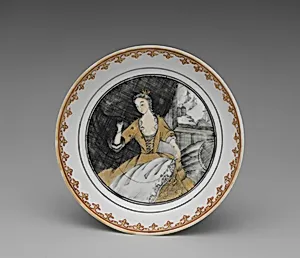
Saucer (part of a service)
Unknown Artist
1750–70
Medium
Hard-paste porcelain
Dimensions
Diameter: 4 1/2 in. (11.4 cm)
Classification
Ceramics-Porcelain-Export
Culture
Chinese, possibly for Dutch market
Department
European Sculpture and Decorative Arts
Museum
Metropolitan Museum of Art, New York, NY
Credit
Helena Woolworth McCann Collection, Gift of Winfield Foundation, 1951
Accession Number
51.86.290
Rights
Public Domain
Tags
Art Historical Context
This delicate saucer, part of larger porcelain service crafted in China around 1750–70, exemplifies the pinnacle of 18th-century export porcelain Made from hard-paste porcelain—a translucent, durable material perfected by Chinese potters centuries earlier—it measures just 4½ inches in diameter, ideal for tea or coffee services popular in European households. Its classification as "Ceramics-Pcelain-Export" highlights journey from Jingdezhen kilns to international markets, likely tailored for Dutch consumers via the Dutch East India Company. The saucer's charm lies in its painted decoration, featuring scenes of women sewing—a motif evoking domestic tranquility and feminine virtue that resonated with European tastes during the Enlightenment era. These export wares blended Chinese technical mastery with subtle adaptations to Western preferences, fueling the craze for chinoiserie. Acquired through the Helena Woolworth McCann Collection and now housed in the Metropolitan Museum of Art's European Sculpture and Decorative Arts department, it offers a tangible link to global trade networks that shaped tastes and economies. Though the artist remains unknown, this piece underscores porcelain's role as a cultural ambassador, bridging East and West in an age of exploration and exchange.