
Saucer (part of a service)
ca. 1780–90
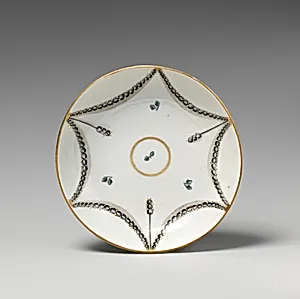
Medium
Soft-paste porcelain
Dimensions
Diameter (each): 3 13/16 in. (9.7 cm); Diameter (.375): 3 3/4 in. (9.5 cm)
Classification
Ceramics-Porcelain
Culture
British, Caughley
Department
European Sculpture and Decorative Arts
Museum
Metropolitan Museum of Art, New York, NY
Credit
Gift of Dr. and Mrs. A. L. Garbat, 1961
Accession Number
61.107.376
Rights
Public Domain
Art Historical Context
This delicate saucer, part of a larger porcelain service produced by the Caughley around 1780–90, exemplifies the elegance of late 18th-century British ceramics. Measuring just under 4 inches in diameter, these soft-paste porcelain pieces crafted in Shropshire, England, at a factory renowned for its refined tableware. Caughley porcelain, often featuring blue transfer-printed designs inspired by Chinese exports like the willow pattern, catered to the growing British middle class's taste for affordable luxury. Soft-paste porcelain, a European innovation blending clay, ground glass, and soapstone, offered a creamy translucency and affordability compared to true hard-paste from Asia. Caughley's techniques, including underglaze cobalt-blue printing, allowed for intricate motifs that captured the exotic allure of Orientalism during the Georgian era. These saucers would have graced tea tables, reflecting Britain's booming tea-drinking culture fueled by East India Company imports. Now in the Metropolitan Museum of Art's European Sculpture and Decorative Arts collection—thanks to a 1961 gift from Dr. and Mrs. A. L. Garbat—this saucer highlights Caughley's brief but brilliant legacy before its 1799 closure. It invites us to savor the artistry of everyday refinement in a pivotal age of industrial innovation.