
Scarab
Unknown Artist
ca. 1295–1070 B.C.
Medium
Faience
Dimensions
L. 1.2 × W. 0.8 × H. 0.5 cm (1/2 × 5/16 × 3/16 in.)
Classification
Scarab
Period
New Kingdom, Ramesside
Department
Egyptian Art
Museum
Metropolitan Museum of Art, New York, NY
Credit
Gift of Darius Ogden Mills, 1904
Accession Number
04.2.556
Rights
Public Domain
Art Historical Context
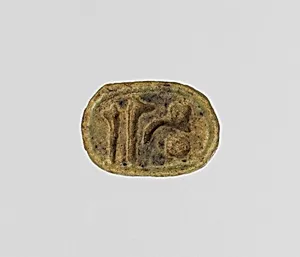
Behold this exquisite scarab, a diminutive from ancient Egypt's New Kingdom (ca. 1295–1070 B.C.), crafted the Ramesside period of Dynasties 19–20. Measuring just 1.2 cm long, this faience amulet captures the era's grandeur in miniature form. Scarabs, shaped like the sacred dung beetle, symbolized rebirth, the sun god Ra, and the cycle of life—ubiquitous in jewelry, seals, and tomb goods amid Egypt's imperial height under pharaohs like Ramesses II. Faience, a glazed composite of quartz, lime, and clay fired to a vibrant blue-green sheen, was prized for mimicking lapis lazuli or turquoise while being affordable and durable. Artisans molded and carved these tiny objects with precision, often inscribing them with spells or royal names for protection. This technique highlights Egyptian mastery of small-scale luxury, blending functionality with profound symbolism. A gift to the Metropolitan Museum of Art from Darius Ogden Mills in 1904, this scarab invites us to ponder the daily spirituality of ancient Egyptians. Though its exact design remains a mystery, it whispers of eternity in a single glance—perfect for sealing documents or safeguarding the wearer in the afterlife.