
Scarab Inscribed for an Official
Unknown Artist
ca. 1802–1575 B.C.
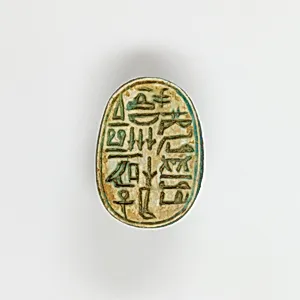
Medium
Glazed steatite
Dimensions
L. 2.4 × W. 1.7 × H. 1 cm (15/16 × 11/16 × 3/8 in.)
Classification
Scarab, Senpu, Min, private name and title
Period
Middle Kingdom
Department
Egyptian Art
Museum
Metropolitan Museum of Art, New York, NY
Credit
Purchase, Edward S. Harkness Gift, 1926
Accession Number
26.7.277
Rights
Public Domain
Tags
Art Historical Context
This petite scarab, inscribed for an official, hails from Egypt's Middle Kingdom, specifically 13 (ca. 1802–1575 B.C.), a time of political fragmentation yet enduring cultural traditions. Carved in the shape of the sacred scarab beetle—symbol of the sun god Khepri and rebirth—the amulets served as seals, jewelry, or protective talismans. Officials often commissioned them to assert identity and authority, with hieroglyphs etching names, titles, or protective spells on the flat base. Crafted from glazed steatite, a soft soapstone transformed by firing with a colorful glaze, this 2.4 cm artifact exemplifies ancient Egyptian mastery of small-scale luxury goods. The glazing technique, akin to faience production, yielded a vibrant, durable sheen, making scarabs both functional for rolling seals in clay and visually striking. Its diminutive size belies its portability and prestige. Housed in the Metropolitan Museum of Art's Egyptian Art department (purchase, Edward S. Harkness Gift, 1926), this scarab offers a glimpse into bureaucratic life, where such items bridged the mundane and divine, ensuring an official's legacy endured. A testament to Egypt's hieroglyphic artistry, it invites us to ponder the whispers of power from over 3,500 years ago.