
Scarab of Ramesses II
Unknown Artist
ca. 1295–1070 B.C.
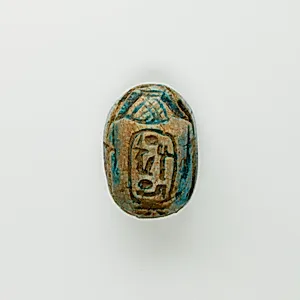
Medium
Glazed steatite
Dimensions
L. 1.90 cm (3/4 in.)
Classification
Scarab, Ramesses II
Period
New Kingdom, Ramesside
Department
Egyptian Art
Museum
Metropolitan Museum of Art, New York, NY
Credit
Theodore M. Davis Collection, Bequest of Theodore M. Davis, 1915
Accession Number
30.8.625
Rights
Public Domain
Tags
Art Historical Context
Behold the **Scarab of Ramesses**, a petite gem from ancient Egypt's New Kingdom (. 1295–1070 B.C.), crafted during the Ramesside of Dynasties 19–20. This glazed steatite amulet, just 1.9 cm long, likely commemorates one of history's most iconic pharaohs, Ram II—the "Great"—whose 66-year reign (ca. 1279–1213 B.C.) saw monumental temples like Abu Simbel and epic battles such as Kadesh. Scarabs like this were everyday power symbols, shaped like the sacred dung beetle to evoke Khepri, the sun god of rebirth and renewal. Expertly carved from soft steatite (soapstone) and fired with a vibrant glaze—often blue or green for divine allure—this scarab features finely inscribed hieroglyphs, probably bearing the king's royal name or titles. Such techniques allowed mass production yet personalized magic, serving as seals, jewelry, or protective talismans worn by elites and commoners alike. Its glossy finish and precise detailing highlight the era's mastery of lapidary arts. A testament to Egypt's enduring fascination with eternity, this scarab from the Theodore M. Davis Collection now shines in the Metropolitan Museum of Art's Egyptian Art department. Tiny but mighty, it whispers of a pharaoh's glory and the cycle of life.