
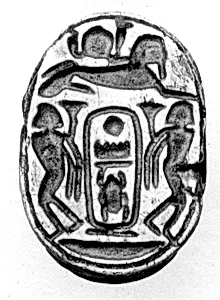
Scarab of Thutmose III
Unknown Artist
ca. 1479–1425 B.C.
Medium
Glazed steatite
Dimensions
l. 2.8 cm ( 1 1/8 in)
Classification
Scarab, Thutmose III
Period
New Kingdom
Department
Egyptian Art
Museum
Metropolitan Museum of Art, New York, NY
Credit
Purchase, Edward S. Harkness Gift, 1926
Accession Number
26.7.167
Rights
Public Domain
Tags
Art Historical Context
Behold the *Scarab of Thutm III*, a petite yet powerful artifact from ancient Egypt's New Kingdom (. 1479–1425 B.C.), crafted during Dynasty 18. Shaped like the sacred scarab beetle—symbol of rebirth and the sun god Khepri—this glazed steatite amulet just 2.8 cm long, small enough to wear as jewelry or use as a seal. Thutmose III, the-pharaoh who transformed Egypt into an empire through 17 victorious campaigns, likely commissioned such items to proclaim his divine authority and protect the wearer in the afterlife. Expertly carved from soft steatite (soapstone) and coated with a vibrant glaze for durability and luster, the scarab showcases the Egyptians' mastery of miniature hieroglyphic inscriptions. These intricate carvings, often including royal names or protective spells, turned everyday objects into talismans of power and eternity. Scarabs like this were ubiquitous, serving as seals for documents, good-luck charms, or memorials, blending artistry with profound spiritual symbolism. Today, this treasure resides in the Metropolitan Museum of Art's Egyptian Art Department, acquired through the Edward S. Harkness Gift in 1926. It offers a tangible glimpse into a pharaoh's golden age, reminding us how even tiny beetles carried the weight of immortality.