
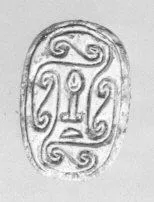
Scarab seal
Unknown Artist
ca. 1786–1650 BCE
Medium
Steatite, white
Dimensions
Seal Face: 1.87 x 1.29 cm Height: 0.81 cm String Hole: 0.2 cm
Classification
Stone-Stamp Seals-Inscribed
Period
Dynasty 15-17, 2nd Intermediate Period, Hyksos
Department
Ancient Near Eastern Art
Museum
Metropolitan Museum of Art, New York, NY
Credit
Gift of Harris D. and H. Dunscombe Colt, 1934
Accession Number
34.126.22
Rights
Public Domain
Art Historical Context
This exquisite scarab seal, crafted from white steatite around 1786–1650 BCE, hails from Egypt's 2nd Intermediate Period (Dynasties 15–17), a time of political fragmentation and foreign influence under the Hyksos rulers Measuring just 1.87 x 1.29 cm on its seal face and 0.81 cm high, with a tiny 0.2 cm string hole, it was likely worn as a personal amulet or used to impress seals on clay documents or goods. The scarab beetle form—sacred to ancient Egyptians as a symbol of rebirth and the sun god Khepri—reflects enduring religious motifs even amid Hyksos innovation. As an inscribed stone stamp seal, it exemplifies fine ancient craftsmanship: steatite, a soft soapstone, allowed skilled carvers to incise intricate hieroglyphs or motifs on the flat base for stamping ownership or authority. These diminutive objects were ubiquitous in daily life, blending utility with protective magic. Produced during the Hyksos era, when Asiatic rulers blended Egyptian traditions with Near Eastern styles, this seal highlights cultural fusion in the Nile Delta. Today, housed in the Metropolitan Museum of Art's Department of Ancient Near Eastern Art (gift of Harris D. and H. Dunscombe Colt, 1934), it offers a tangible glimpse into a turbulent yet creative epoch, reminding us how tiny artifacts sealed the stories of ancient lives.