
Scarab with cartouche of Usermaatre
Unknown Artist
ca. 1295–1070 B.C.
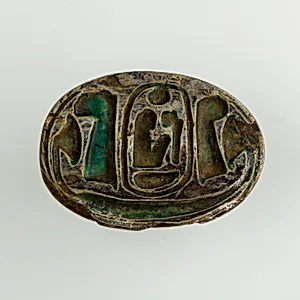
Medium
Glazed steatite
Dimensions
L. 3 cm (1 3/16 in.)
Classification
Scarab, Ramesses II
Period
New Kingdom, Ramesside
Department
Egyptian Art
Museum
Metropolitan Museum of Art, New York, NY
Credit
Theodore M. Davis Collection, Bequest of Theodore M. Davis, 1915
Accession Number
30.8.593
Rights
Public Domain
Tags
Art Historical Context
This exquisite glazed steatite scarab, measuring just 3 cm in length, hails from Egypt's New Kingdom during the Ramesside period (Dynasties 19–20, ca. 1295–1070 B.C.). Shaped like the sacred dung beetle, scarabs were potent symbols of rebirth, transformation, and the sun god, embodying the cycle of life central to ancient Egyptian beliefs. The beetle's form was chosen because it was observed rolling dung balls, mirroring the sun's daily journey across the sky. Engraved on its base is the cartouche of Usermaatre— the throne name of Ramesses III, a mighty pharaoh of Dynasty 20 renowned for defending Egypt against the Sea Peoples' invasions. Cartouches, these protective oval enclosures, were reserved for royal names, signifying divine authority and eternity. Such scarabs served as seals, amulets, or jewelry, often worn for protection or to invoke the king's power. Crafted from steatite (soft soapstone) and glazed for a vibrant, durable sheen, this piece showcases the era's masterful lapidary techniques. Donated through the Theodore M. Davis Collection to the Metropolitan Museum of Art in 1915, it offers a tangible glimpse into Ramesside devotion and artistry, reminding us of ancient Egypt's enduring reverence for the divine order of *ma'at*.