
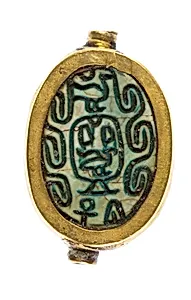
Scarab with the Name of the Hyksos King Khayan
Unknown Artist
ca. 1620–1581 B.C.
Medium
Steatite, gold mount
Dimensions
L. 2 cm (13/16 in)
Classification
Scarab, Khayan
Period
Second Intermediate Period
Department
Egyptian Art
Museum
Metropolitan Museum of Art, New York, NY
Credit
Theodore M. Davis Collection, Bequest of Theodore M. Davis, 1915
Accession Number
30.8.457
Rights
Public Domain
Tags
Art Historical Context
This exquisite scarab, carved from steatite and set in a gleaming gold mount, measures just2 cm in length, making it a delicate jewel from ancient Egypt's turbulent Second Intermediate Period (ca.1620–1581 B.C.). Crafted during Dynasty 15, it bears the name of King Khayan, a ruler of the Hyksos—a Semitic people from the Levant who seized control of Lower Egypt amid political fragmentation. Such scarabs served as seals, amulets, and status symbols, their beetle shape evoking the god Khepri, symbol of rebirth and the sun's daily renewal. The Hyksos era marked a fascinating cultural fusion: these foreign kings adopted Egyptian royal titles and iconography while introducing innovations like the chariot. Khayan's scarab, likely used to authenticate documents or worn as jewelry, exemplifies their legitimacy claims through traditional Egyptian craftsmanship. Steatite, a soft soapstone, allowed for intricate carving of hieroglyphs, often glazed for durability and luster. Housed in the Metropolitan Museum of Art's Egyptian Art Department from the Theodore M. Davis Collection, this tiny artifact offers a window into a pivotal dynasty's brief but influential reign, bridging native traditions and foreign rule before the New Kingdom's resurgence.