
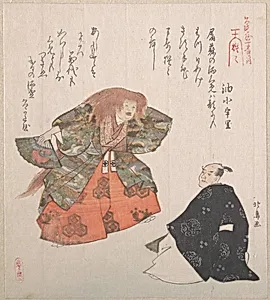
Scene from the Noh Dance "Shojo"
19th century
Medium
Part of an album of woodblock prints (surimono); ink and color on paper
Dimensions
8 1/4 x 7 3/8 in. (21 x 18.7 cm)
Classification
Prints
Culture & Period
Japan · Edo period (1615–1868)
Department
Asian Art
Museum
Metropolitan Museum of Art, New York, NY
Credit
H. O. Havemeyer Collection, Bequest of Mrs. H. O. Havemeyer, 1929
Accession Number
JP2261
Rights
Public Domain
Tags
Art Historical Context
This exquisite woodblock print, titledScene from the Noh "Shojo"*, captures a dynamic moment from a traditional Japanese Noh performance, created in the 19th century Japan's Edo period (16151868). Attributed to artists Yuyu Hanko and Teisai Hokuba—figures in the ukiyo-e influenced by masters like Hokusai—it forms part of a luxurious *surimono* album. These privately commissioned prints, often produced for New Year's celebrations or poetry gatherings, showcase superior craftsmanship with vibrant inks, subtle colors, and fine details on paper, measuring just 8¼ x 7⅜ inches. The scene evokes the ethereal world of Noh theater, where masked performers enact timeless tales with stylized dance and music. "Shojo" depicts mythical shōjō spirits—celestial beings fond of sake—dancing gracefully, as suggested by the tags of fans, men, and dance. Fans (*ōgi*) serve both as props and symbolic elements, enhancing the rhythmic poses and flowing robes that convey poetic elegance and spiritual joy. Housed in the Metropolitan Museum of Art's Asian Art Department from the H.O. Havemeyer Collection, this print highlights Edo Japan's fusion of art and performance, inviting viewers to appreciate the cultural reverence for Noh's refined beauty and the artistry of *surimono*'s intimate scale. A window into festive traditions!
About the Artist
Yuyu Hanko|Teisai Hokuba (Japanese|Japanese) · |1771 – |1844
Japanese|Japanese, 1771–1844