
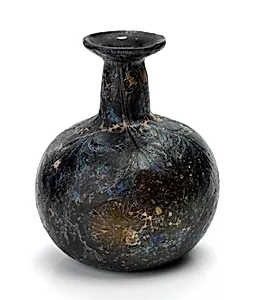
Scent Bottle
400-200 B.C.
Medium
Decorative Arts-Glass
Classification
Decorative Arts-Glass
Department
Smithsonian Collection
Museum
Smithsonian American Art Museum
Credit
Smithsonian American Art Museum, Gift of John Gellatly
Accession Number
1929.8.157.29
Rights
Public Domain
Tags
Art Historical Context
This delicate Roman scent bottle, dating from 400-200 B.C., exemplifies artistry of ancient glassmaking during the late Classical to early Hellenistic period. Crafted an unidentified Roman artisan, it served as a practical container for perfumes, oils, or cosmetics—essentials in daily grooming and ritual life. Housed in the Smithsonian American Art Museum's Decorative Arts-Glass collection, it was generously gifted by John Gellat, highlighting how ancient treasures enrich modern American collections. Glass production in this era relied on innovative techniques like core-forming, where a removable clay core was wrapped with molten glass threads, often trailed in contrasting colors for decorative effect. Though small, these vessels showcase the technical prowess of Mediterranean craftsmen, who transformed fragile silica into durable, elegant forms. Roman glass like this bridged Eastern influences and local ingenuity, becoming ubiquitous in households and tombs. Culturally, such scent bottles reflect the Romans' appreciation for sensory luxury and personal adornment, underscoring hygiene's role in social status. This piece invites us to imagine a world where beauty was bottled in shimmering glass, preserving scents across millennia.