
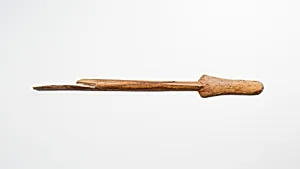
Scepter case (?)
Unknown Artist
ca. 1981–1802 B.C.
Medium
Wood
Dimensions
L. 94 cm (37 in.)
Classification
Scepter case (?)
Period
Middle Kingdom
Department
Egyptian Art
Museum
Metropolitan Museum of Art, New York, NY
Credit
Rogers Fund, 1927
Accession Number
27.3.161
Rights
Public Domain
Art Historical Context
This elegant wooden scepter case, to Egypt's Middle Kingdom (ca. 1981–1802 B.C.) during Dynasty 12, offers a glimpse into the refined artistry of a golden age. The Middle Kingdom marked a period of reunification and stability after centuries of turmoil, with pharaohs like Amenemhat I and Senusret I fostering cultural revival. Scepters—symbols of divine authority, often shaped as a crook (heka) or flail (nekhakha)—were essential regalia for rulers and high officials, carried in ceremonies or buried in tombs to ensure eternal power. Crafted from wood, a lightweight yet durable medium prized for its workability, this 94 cm (37 in.) long case likely protected such an emblem. Its survival speaks to masterful ancient preservation techniques, as organic materials rarely endure millennia. While details of decoration are not specified, Dynasty 12 objects often featured precise carving, gilding, or inlays evoking lotus motifs and hieroglyphs, blending utility with symbolism. Acquired through the Rogers Fund in 1927, this artifact from the Metropolitan Museum of Art's Egyptian collection highlights everyday elite objects that bridged the mortal and divine, reminding us of ancient Egypt's enduring quest for order (maat) in life and afterlife.