
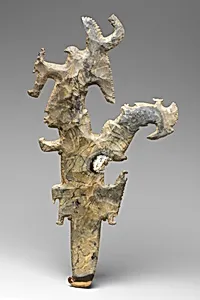
Scepter with profile figures
7th–8th century
Medium
Flint
Dimensions
H. 13 5/8 x W. 7 1/2 x D. 5/8 in. (34.6 x 19.1 x 1.6 cm)
Classification
Stone-Sculpture
Culture
Maya
Department
Arts of Africa, Oceania, and the Americas
Museum
Metropolitan Museum of Art, New York, NY
Credit
The Michael C. Rockefeller Memorial Collection, Purchase, Nelson A. Rockefeller Gift, 1967
Accession Number
1978.412.195
Rights
Public Domain
Art Historical Context
This remarkable scepter, crafted by Maya artists in the 7th–8th century, exemplifies the sophisticated stone-working traditions of Classic Maya culture. Fashioned from flint, a material prized for its sharpness and symbolic resonance, the object measures just over thirteen inches tall and features delicately chipped profile figures along its form. Such scepters likely served as ceremonial regalia, held by rulers or high-ranking individuals during rituals that connected earthly power with the divine realm. In Maya society of the Late Classic period, flint objects known as “eccentrics” were not merely tools but sacred items embodying transformation and ancestral presence. The profile figures probably represent deities, ancestors, or mythological beings, their stylized outlines achieved through masterful pressure-flaking techniques that reveal the artist’s deep understanding of the stone’s properties. Displayed today at the Metropolitan Museum of Art, this piece offers visitors a tangible link to the spiritual and political life of ancient Maya courts. The scepter’s elegant proportions and intricate detailing underscore the Maya reverence for craftsmanship as an expression of cosmic order. Its presence in museum collections highlights how such portable regalia traveled through time, preserving stories of authority, ritual, and artistic excellence from Mesoamerica’s rich past.