
Schapen
1728 - c. 1761
Medium
etching
Dimensions
147; 116
Rights
Public Domain
About this artwork
collector's mark: Lugt 240
Art Historical Context
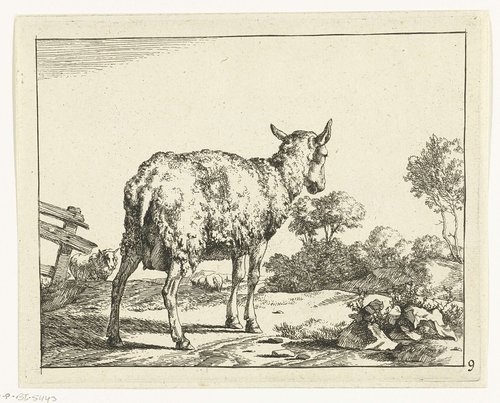
**Schapen (Sheep)** *Marcus de Bye, 1728–c. 1761, etching, 116 × 147 mm* "Schapen," meaning "Sheep" in Dutch, is a charming etching by the 18th-century Dutch artist Marcus de Bye. Created sometime between 1728 and around 1761, this small-scale print (just 116mm high by 147mm wide) captures a pastoral scene likely featuring sheep, a popular motif in Dutch art evoking the tranquility of rural life. De Bye's work reflects the enduring tradition of animal studies from the Dutch Golden Age, even as that era waned, blending everyday observation with artistic finesse. Etching was de Bye's preferred medium, allowing him to draw fluid lines directly onto a metal plate, which were then bitten by acid to create rich, textured effects—ideal for the soft curves of wool and gentle contours of grazing animals. His prints, often intimate in size, were affordable and widely collected, making art accessible beyond oil paintings. This piece bears the collector's mark Lugt 240, indicating ownership by a noted 18th-century collector, which underscores its historical value and the high regard for de Bye's meticulous technique among contemporaries. A window into Dutch countryside nostalgia, "Schapen" invites visitors to appreciate the quiet beauty of printmaking's precision.